

Thank you for Subscribing to Business Management Review Weekly Brief




Business Management Review: Speials Magazine
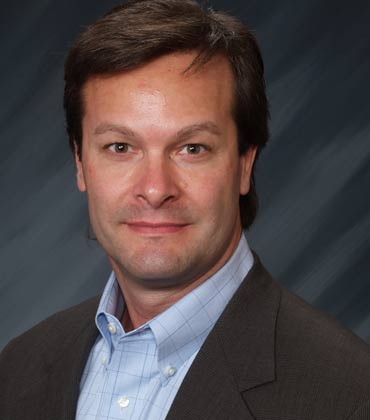
Why is franchising often misunderstood by aspiring owners? The scope of franchising in the U.S. is often narrowly understood. Many aspiring business owners associate it with familiar sectors like food, fitness, automotive or hospitality. In reality, it spans a far broader range of industries, ownership models and investment structures. Understanding those differences—and how they align with a person’s goals, experience and lifestyle—requires more than surface-level knowledge. That perspective comes naturally to Mark Brandt. A Certified Franchise Consultant and member of the International Franchise Professionals Group, Brandt brings over two decades of firsthand experience building businesses across franchise-like models, startups and corporate environments. Brandt’s passion for the American Dream is reflected in his independent practice, All American Franchise Fits, through which he extends the same opportunity to those who aspire to business ownership. By offering advice grounded in lived experience, he guides clients through the entire franchising process, from assessing opportunities to making informed choices. “I don’t sell franchises,” says Brandt. “I help clients find the right business fit by empowering them with the necessary knowledge and tools.” Brandt works with one of the largest franchise portfolios, spanning more than 600 brands across 70 industries. Instead of steering candidates toward specific brands, he focuses on helping them understand how franchising works and what makes a brand truly viable for them. A Structured, Education-First Franchise Discovery Process How does the structured discovery process reduce risk? All American Franchise Fits follows a structured discovery process that enables individuals to approach franchising with clarity before commitment. Brandt positions himself as an active resource center throughout the journey, adjusting his guidance as each stage unfolds. Early conversations are relationship-driven and direct. Brandt outlines exactly who he is, how he operates and what role he will—and will not—play in the decision. Education anchors the process. Candidates first gain a grounded understanding of franchising fundamentals, including the differences between franchise models and what strong franchisors are expected to provide in terms of support. Real-world value of established systems, including brand recognition, proven operating playbooks, marketing and technology infrastructure, recruiting support and purchasing scale, is examined not as selling points, but as measurable advantages.
Franchise Consultant
Main Entrance Franchise Consulting’s story is deeply intertwined with the experiences of its CEO and certified franchise consultant, Max Emma. At just 18, Emma emigrated from the former Soviet Union, driven by a determination to carve out a successful future in a new country. His early business ventures were met with challenges, but instead of stepping back, Emma co-founded BooXkeeping—a bookkeeping service that is now a preferred bookkeeping provider for over 100 franchise brands in the US. Also, Max has franchised BooXkeeping and is a franchisor of his own brand. This experience became the cornerstone of Main Entrance Franchise Consulting, where Emma leverages his unique dual perspective—as both a service provider to franchisees and a franchisor of BooXkeeping. With this blend of experiences, he crafts tailored, actionable strategies that empower clients to confidently discover, purchase and successfully grow their franchise businesses. Setting Main Entrance apart is its promise to a customer-centric journey. Rather than merely matching candidates with any franchise, the team delves deeply into understanding each individual’s unique aspirations, lifestyle preferences and long-term vision. Acknowledging that each client’s path is different—whether it’s the desire to work long hours for greater gains, establish passive income streams, remain within a traditional office environment or be out in the field as the face of a brand—Main Entrance prioritizes aligning candidates with franchises that reflect where they see themselves in the next three to five years.
Business Growth Consultant
Each business dreams of growth, but what does that really mean? For some, it’s about expanding sales and gaining new customers. Others see growth in improving operations to boost profits. Then there are businesses planning for the future, aiming to maximize their market value for a sale or merger. The challenge lies in defining what growth truly means for each company—and determining how to achieve it. This is where Johnny Grow steps in. Dubbed the “revenue architect,” the company helps businesses uncover their growth priorities and transform them into actionable, science-backed plans. It drives revenue, profits, and market capitalization by bridging the gap between large-scale expertise and the needs of mid-market businesses. Unlocking Growth Potential Johnny Grow treats growth as a measurable science rather than an art, applying precision and data-driven methodologies to deliver personalized solutions for mid-sized companies. Its approach focuses on three key areas: implementing strategies to acquire new customers and maximize opportunities with existing ones, increasing efficiency and margins through data-driven insights, and preparing businesses for future liquidity events by optimizing their valuation. These services are delivered with a deep understanding of mid-market challenges, such as smaller budgets and leaner teams, making Johnny Grow a true partner for companies looking to scale. At the core of Johnny Grow’s methodology is a proprietary framework called Ascend, which identifies three ways to grow revenue: customer acquisition, customer expansion, and strategic pricing. "We believe revenue and profit growth are science-based efforts—data-driven, fact-based, and measurable. That’s why we’ve developed our growth accelerator methodology," says Chuck Schaeffer, CEO of Johnny Grow. The process begins with a deep dive into each client’s current operations. This involves assessing what works, identifying gaps, and creating a roadmap aligned with their specific goals—whether focused on revenue, profit, or valuation growth.
CXO INSIGHTS
Designing Exceptional Cinematic Experiences
Chris Drazba, Chief Development Officer, Alamo Drafthouse Cinema
The Evolution of Collectibles: Blending Nostalgia with Innovation
David Tierney, Sr. Creative Director, Panini America
Building Success Through Collaborative Execution
Jeremy M. Clayton, Director of Project Management, Ruppert Landscape
Redefining Food Safety in School Nutrition
Jason Schwartz, Director of Safety and Risk Management, SFE- Southwest Foodservice Excellence
Role of CIO in Business Development and Innovations
David Beckerman, SVP and CIO, The Pasha Group
IN FOCUS

Market Research Unveiled: Key Advantages for Thriving Businesses
Market research reduces investment risk, detects potential threats, and helps organizations remain ahead of the competition.

Value Creation: Innovation Pathways within Franchise Consulting Services
Business franchise consulting services enable scalable growth through strategic planning, operational alignment, analytics integration, and advisory frameworks supporting sustainable franchise performance.
EDITORIAL
Structuring Franchise Ownership
As business ownership becomes increasingly complex, the ability to navigate opportunities with clarity and structure is emerging as a defining advantage. In this issue of Business Management Review, we examine how franchise consulting is evolving to support more informed and deliberate decision-making.
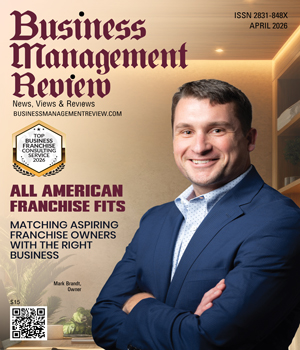
Our cover story, All American Franchise Fits, which was recognized as the Top Business Franchise Consulting Service 2026, highlights a shift toward education-driven, alignment-focused advisory. Led by Mark Brandt, the firm follows a structured discovery process that prioritizes understanding before commitment. With access to more than 600 brands across 70 industries, it equips candidates with the frameworks needed to evaluate opportunities independently. By emphasizing mutual fit over placement and validating both operational and cultural alignment, the firm transforms franchising into a disciplined pathway to ownership rather than a transactional decision.
Contributor perspectives further expand the discussion on how industries are balancing tradition with innovation. David Tierney, Sr. Creative Director at Panini America, highlights how collectibles are evolving through storytelling, technology, and immersive engagement while preserving their nostalgic value. Jason Schwartz, Director of Safety and Risk Management at SFE- Southwest Foodservice Excellence, emphasizes that operational excellence is achieved when standards such as food safety are embedded into culture rather than treated as procedural requirements.
As industries continue to evolve, success will depend on combining structured execution with adaptability and purpose-driven decision-making. We invite readers to explore the full issue and engage with the insights shaping the future of business ownership.
