

Thank you for Subscribing to Business Management Review Weekly Brief









Business Management Review: Speials Magazine
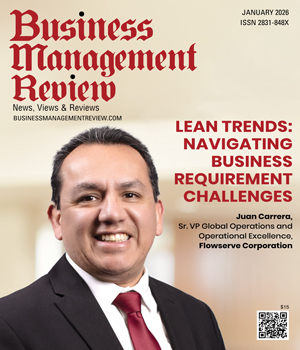
1. How do emerging lean manufacturing trends potentially impact addressing challenges in satisfying business requirements? To answer this question, we need to start with the fundamental concept of Lean. Lean focuses on an organization’s ability to identify waste and non-value-added activities in the business, enterprise, manufacturing, and supply chain processes, from order to cash, that impact their ability to maximize the potential for the organization to grow their business, margins, and optimize their use of working capital. Companies with amazing people-first cultures, clearly defined value statements, and solid educational programs create the foundation needed for lean enterprise implementation and accelerated execution for customers and investors. The concept of “lean” is more than just manufacturing. It has to be part of your enterprise business model. With that in mind, there are many emerging trends—one we’re seeing a lot in today’s world is artificial intelligence (AI). There’s a lot to be explored here, but one of the critical tools of Lean is understanding your actual state and establishing a future state of how you want to operate your business or process. During the development of the future state, identifying potential waste and non-value-added activities is objective and is where AI comes into the game. An example of this is an order entry with 0 errors, where AI can help you identify customer requirements in different forms, drastically reducing the lead time at the front end of the process. 2. Can you share your experiences from one of the projects you were recently involved in? One recent project we have worked on is creating a clear path to gain speed in our execution through a well-connected management system.
Top Fractional CIO Services 2026
Most companies today recognize that technology is a key vehicle for creating competitive advantage. Yet even with strong internal tech teams in place, many organizations find themselves struggling to harness the full potential of available solutions and tools. The issue is not a lack of technical expertise or effort. It is the absence of a senior voice to align technology with business strategy. NortheastCIOs bridges the gap, offering flexible, executive-level IT leadership that helps businesses transform routine technology work into a competitive business advantage. Thomas Licciardello, practice lead and principal CIO, has witnessed this pattern across mid-market businesses spanning industries such as healthcare, finance, media, education, and nonprofits. These organizations believe in the power of technology and want to use it to create competitive advantage, but their internal teams are often consumed by the immediate demands of operations. NortheastCIOs becomes the senior voice these teams are missing, offering guidance, mentorship, practical IT strategy and executive clarity. Through its fractional CIO services, the company provides organizations with seasoned leadership at a fraction of the cost, enhancing systems, refining processes, and aligning technology with business goals. “We are not here for a one-and-done fix. When companies choose a fractional CIO, it is a significant step, and we treat it that way. Our goal is to be a true partner, offering clarity, guidance, and long-term support from day one,” says Licciardello. Organizations initially reach out to NortheastCIOs for one primary reason: they recognize a critical leadership gap in their technology function but are unsure of the best path forward. They may be exploring the emerging concept of fractional executive leadership as a flexible and impactful solution to this challenge. NortheastCIOs begins by demonstrating the strategic value of fractional CIO services, outlining a comprehensive approach that transforms technology from a cost center into a competitive advantage..
Top Crisis Communication Service 2026
Davies Public Affairs has been named Crisis Communications Firm of the Year, a recognition that reflects the firm’s work helping organizations avoid crises, prepare for them and manage them when they hit. CEO and Chairman John Davies said the award is less about clever messaging and more about discipline under pressure, starting with basic decisions that many organizations have not made before an incident occurs. “The biggest thing is who’s going to speak, who’s in charge and how do we get a message out quickly and honestly,” Davies said. Davies described the firm’s crisis work as a three-part model: prevention, preparation and response. The prevention piece often looks like community engagement and early listening for clients developing projects that can trigger fear or organized opposition. Davies said the goal is to keep a situation from becoming a crisis in the first place by making a strong first impression and building relationships before a controversy hardens. Preparation is built around plans that are intentionally simple. Davies said a plan must define what a crisis is, identify triggers and clarify roles, approvals and escalation so the organization can move fast without guessing. “The plans don’t need to be elaborate,” he said, adding that they need to be “simple and actionable.” The third stage is hands-on crisis management. That work includes media response and statement development, but Davies said the real test is staying clear-eyed about audiences and the facts, especially when clients are tempted to overreact or freeze..
Market Research Firm
In a world flooded with traditional market research methods and the growing influence of AI, many companies still rely on outdated strategies that focus solely on surface-level data. Enter HumanBranding—a revolutionary force that stepped into an industry bogged down by conventional thinking and completely redefined the landscape. Human Branding has always stood apart from traditional market research, challenging the norms that dominated the industry. This outsider perspective has proven to be the company’s greatest strength, allowing it to uncover insights that others often overlook. From the very beginning, Human Branding understood that true insight into human behavior goes far beyond what is immediately visible. Human Branding didn’t just accept the status quo—it redefined the entire landscape of market research. The company has spent nearly two decades dismantling the limitations of traditional market research, delivering insights that speak to the emotional, psychological, linguistic, cultural, and contextual factors driving human decisions. Its clients include Fortune 500 players across pharma, health, wellness, and packaged goods—industries where human behavior is complex, highly emotional, and often misunderstood. Human Branding’s ability to step outside the boundaries of traditional approaches became its defining advantage. The company didn’t simply follow the well-worn path—it forged a new one, offering a profound shift in how businesses understand their audiences. Recognizing the failings of traditional research, Human Branding pioneered a new way of thinking. It combined qualitative and quantitative research with ethnographic methodologies and proprietary behavioral science frameworks, unlocking insights that go far beyond the obvious. These insights penetrate the deeper emotional and psychological drivers behind human choices, transforming basic data into powerful, human-centered strategies that resonate on a much more profound level. In today’s high-stakes marketing environment, where data pours in from every touchpoint and artificial intelligence promises instant answers, a surprising trend is emerging: a return to human understanding. Not just customer feedback or consumer sentiment, but a deeper, more rigorous decoding of human behavior, rooted in anthropology—the original behavioral science. While AI’s capacity to process vast amounts of data is groundbreaking, it has a crucial limitation: it cannot grasp the complexity of human behavior, particularly the emotional and subconscious factors that influence decisions. Human Branding offers more nuanced insights that go beyond numbers, revealing the hidden layers of human motivation that drive decision-making. Human Branding’s approach is designed to reveal not just what people do, but why. It’s a discipline that sits at the intersection of data and meaning—and it’s proving to be a powerful strategic asset in an increasingly commoditized insights landscape. In the words of Johanna Faigelman, founder and CEO of Human Branding, “We’re not just about collecting data; we’re about understanding what drives people on a deeper, more emotional level. Anthropology allows us to dig into the complexities of human behavior—the beliefs, values, emotions, and influences that shape decisions. This helps businesses craft strategies that don’t just talk at consumers, but resonate with them.”
CXO INSIGHTS
Designing Exceptional Cinematic Experiences
Chris Drazba, Chief Development Officer, Alamo Drafthouse Cinema
How I Look at Business Communication-The Necessary Tool for Successful Business
Walter Bridgham, Senior Business Development Manager- Home & Interior, Lenzing Group [VIE: LNZ]
A Lifetime of Excellence in Concierge Service
Thomas Wolfe, Chef Concierge and Director of Heritage, Fairmont San Francisco
Shaping Workplaces Where Everyone Belongs
Pammi Bhullar, Senior Director, Corporate Citizenship (Head of DE&I and Philanthropy), Edelman Financial Engines
Responsible AI: The Human-Machine Symbiosis
Sal Cucchiara, CIO and Head of Wealth and Investment Management Technology, Morgan Stanley [NYSE: MS]
Strategic IT Leadership in Business Process Management
Brad Sexton, CIO, Terrible’s
Navigating the Evolution of ERP: Business Objectives, Research Extensions, and Digital Debt Management
Alfred Zhu, VP of Digital Technologies, The Middleby Corporation [NASDAQ: MIDD]


IN FOCUS

Rising Strategic Influence of Fractional CIO Services in Modern Business Leadership
Fractional CIO services gain momentum as companies seek cost-efficient, high-level IT strategy, leveraging digital transformation, cybersecurity, and modernization.

Empowering Organizations: Crisis Communication Strategies for Resilience
Crisis communication is essential for businesses to manage risks, maintain trust, and ensure continuity through digital tools, strategic planning, and transparent messaging in a complex environment.
EDITORIAL
Turning Discipline into Durable Value
This edition of Business Management Review examines how organizations respond to growing complexity and risk by strengthening discipline, alignment and preparedness to drive sustainable performance.
The cover story features Juan Carrera, SVP Global Operations and Operational Excellence at Flowserve Corporation, who presents lean as an enterprise management system. He emphasizes culture, strategy deployment and daily management, supported by aligned systems and analytics, noting that AI and automation deliver value only when built on stable processes.
This issue also recognizes NortheastCIOs as Top Fractional CIO Services 2026 for its role in helping mid-market organizations more effectively align technology initiatives with broader business objectives. Through its flexible fractional CIO model, the firm provides experienced, executive-level IT leadership to organizations that lack a dedicated senior technology voice. By addressing this leadership gap, NortheastCIOs brings clarity to technology priorities, strengthens budget oversight and establishes structured roadmaps that improve execution, enhance accountability and position technology as a sustained driver of long-term business value.
In parallel, Davies Public Affairs is named Top Crisis Communication Service 2026 for its disciplined, research-led approach to crisis prevention, preparation and response. The firm emphasizes early planning, clearly defined decision-making roles and timely, honest communication tailored to multiple stakeholder audiences. This structured methodology enables organizations to navigate high-stakes situations with greater control, respond decisively under pressure and preserve credibility and trust when it matters most.
Complementing these features, CXO insights from Bill Davis, Sr. Director of Physical Security at Ally [NYSE: ALLY], highlight how modern security programs support regulatory compliance through access control and AI-enabled monitoring. David McDermott, Director of Information Technology at O’Reilly Hospitality Management, examines the operational and cost benefits of transitioning from legacy POTS lines to LTE-based communication infrastructure.
Together, these perspectives highlight that leadership grounded in clarity and discipline enables organizations to navigate complexity and build resilience. Readers are encouraged to engage with the full issue to explore how fundamentals continue to drive long-term value.
