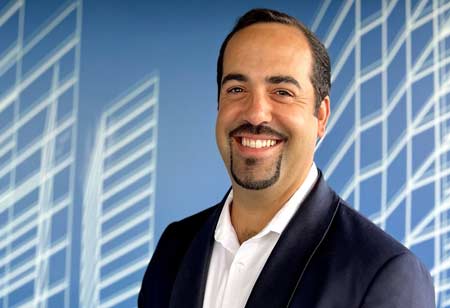
Glenna Gonzalez, a veteran of the digital media landscape is known for guiding business leaders from AI experimentation toward enterprise-wide accountability through high-impact AI audit frameworks. She helps organizations navigate the intersection of AI innovation, governance and strategic communication. Her work brings a distinct perspective on how transparency, trust and responsible automation increasingly define long-term brand value and organizational resilience.
For years, the corporate mandate regarding Artificial Intelligence was singular: speed. Organizations raced to integrate generative models, automate workflows and deploy customer-facing bots with a "move fast and break things" mentality. However, as we navigate the complexities of 2026, the paradigm has shifted. My experience as a consultant has revealed a critical truth: growth is no longer unlocked by the mere presence of AI, but by its verification. We have moved from the era of implementation to the era of inspection.
Early in my career, I focused on the technological “how,” the mechanics of deployment. Today, my approach is rooted in a governance-first philosophy. I’ve seen that the biggest bottleneck to scaling AI isn't a lack of data or computing power. It is a lack of institutional trust. When a model’s output cannot be verified or its logic explained, leadership hesitates. By focusing on AI audits, we don’t just mitigate risk; we clear the debris that prevents high-velocity growth. In this context, an audit is not a bureaucratic hurdle, it is a strategic accelerator.
The Shift Toward Agentic Accountability
Current market trends are rapidly redefining client expectations. We are witnessing the rise of “agentic AI,” systems that don’t just suggest content but execute autonomous decisions. This shift has fundamentally changed the stakes. If a chatbot hallucinates, it’s a PR issue; if an autonomous supply-chain agent malfunctions, it’s a systemic financial failure.
Consequently, clients are moving away from massive, opaque “black-box” models. There is a surging demand for small language models (SLMs) and domain-specific architectures that offer “safety first” capabilities. The trend is clear: the market is rewarding precision over breadth. Organizations now expect AI to be “defensible,” legally, ethically and operationally. In an environment of tightening global regulations, being able to prove why a system made a specific decision has become a prerequisite for market entry.
Balancing Relationships and Revenue
In the consulting world, it is often tempting to prioritize immediate revenue through rapid-fire implementations. However, sustainable success requires balancing short-term gains with long-term strategic value. I view the audit as the ultimate tool for relationship building. It shifts the consultant-client dynamic from a vendor providing a tool to a partner safeguarding a legacy.
Revenue growth in this sector is a function of reliability. When we provide a client with a rigorous audit, we are giving them the confidence to scale. If an AI system is proven safe and compliant, the organization can deploy it across ten departments instead of one. This creates a natural expansion of revenue that is rooted in value rather than high-pressure sales. Strategic value is found in being the “navigator,” while others sell the engine of AI, the auditor provides the dashboard that allows the CEO to drive at full speed without fear of a crash.
Leadership Lessons from the Frontier
Leading through the AI revolution has provided several non-negotiable lessons. Perhaps the most valuable is the importance of radical transparency. In a field characterized by hype, the most effective partners are those who are honest about what AI cannot do. Trust is built in the gaps where we admit limitations.
Furthermore, building sustainable business success requires being a "curator of constraints." Innovation thrives when there are clear boundaries. A leader’s role is to define the ethical and operational guardrails within which the technology can play. This ensures that AI initiatives don’t just bloom and fade but become integrated, permanent fixtures of the business architecture.
Advice for the Next Generation
For professionals looking to build a career in business development and consulting, the future belongs to those with “AI discernment.” You do not need to be a computer scientist, but you must be a “flow architect.” Success will come to those who understand how to design workflows where human intuition and machine intelligence coexist harmoniously.
Invest in building a digital mindset, an understanding of the technical foundation just deep enough to question its logic. The consultants who will lead the next decade are not those who can build the most complex systems, but those who can prove that those systems are worthy of our trust. In the age of AI, the most valuable asset you can offer a client isn't innovation, it's certainty.
For years, the corporate mandate regarding Artificial Intelligence was singular: speed. Organizations raced to integrate generative models, automate workflows and deploy customer-facing bots with a "move fast and break things" mentality. However, as we navigate the complexities of 2026, the paradigm has shifted. My experience as a consultant has revealed a critical truth: growth is no longer unlocked by the mere presence of AI, but by its verification. We have moved from the era of implementation to the era of inspection.
Early in my career, I focused on the technological “how,” the mechanics of deployment. Today, my approach is rooted in a governance-first philosophy. I’ve seen that the biggest bottleneck to scaling AI isn't a lack of data or computing power. It is a lack of institutional trust. When a model’s output cannot be verified or its logic explained, leadership hesitates. By focusing on AI audits, we don’t just mitigate risk; we clear the debris that prevents high-velocity growth. In this context, an audit is not a bureaucratic hurdle, it is a strategic accelerator.
The Shift Toward Agentic Accountability
Current market trends are rapidly redefining client expectations. We are witnessing the rise of “agentic AI,” systems that don’t just suggest content but execute autonomous decisions. This shift has fundamentally changed the stakes. If a chatbot hallucinates, it’s a PR issue; if an autonomous supply-chain agent malfunctions, it’s a systemic financial failure.
Consequently, clients are moving away from massive, opaque “black-box” models. There is a surging demand for small language models (SLMs) and domain-specific architectures that offer “safety first” capabilities. The trend is clear: the market is rewarding precision over breadth. Organizations now expect AI to be “defensible,” legally, ethically and operationally. In an environment of tightening global regulations, being able to prove why a system made a specific decision has become a prerequisite for market entry.
Balancing Relationships and Revenue
In the consulting world, it is often tempting to prioritize immediate revenue through rapid-fire implementations. However, sustainable success requires balancing short-term gains with long-term strategic value. I view the audit as the ultimate tool for relationship building. It shifts the consultant-client dynamic from a vendor providing a tool to a partner safeguarding a legacy.
-
When a model’s output cannot be verified or its logic explained, leadership hesitates. By focusing on AI audits, we don’t just mitigate risk; we clear the debris that prevents high-velocity growth.
Revenue growth in this sector is a function of reliability. When we provide a client with a rigorous audit, we are giving them the confidence to scale. If an AI system is proven safe and compliant, the organization can deploy it across ten departments instead of one. This creates a natural expansion of revenue that is rooted in value rather than high-pressure sales. Strategic value is found in being the “navigator,” while others sell the engine of AI, the auditor provides the dashboard that allows the CEO to drive at full speed without fear of a crash.
Leadership Lessons from the Frontier
Leading through the AI revolution has provided several non-negotiable lessons. Perhaps the most valuable is the importance of radical transparency. In a field characterized by hype, the most effective partners are those who are honest about what AI cannot do. Trust is built in the gaps where we admit limitations.
Furthermore, building sustainable business success requires being a "curator of constraints." Innovation thrives when there are clear boundaries. A leader’s role is to define the ethical and operational guardrails within which the technology can play. This ensures that AI initiatives don’t just bloom and fade but become integrated, permanent fixtures of the business architecture.
Advice for the Next Generation
For professionals looking to build a career in business development and consulting, the future belongs to those with “AI discernment.” You do not need to be a computer scientist, but you must be a “flow architect.” Success will come to those who understand how to design workflows where human intuition and machine intelligence coexist harmoniously.
Invest in building a digital mindset, an understanding of the technical foundation just deep enough to question its logic. The consultants who will lead the next decade are not those who can build the most complex systems, but those who can prove that those systems are worthy of our trust. In the age of AI, the most valuable asset you can offer a client isn't innovation, it's certainty.